
A Founder's Guide to Source to Pay Software
Discover how source to pay software transforms procurement from a cost center to a strategic advantage. Our guide covers workflows, features, and ROI.
Source-to-pay software is the single platform that brings your entire procurement journey together. It covers everything from finding the right suppliers and negotiating contracts to buying goods and paying the bills. Think of it as the central command centre for all company spending, connecting strategic sourcing with the daily grind of purchasing and payments. At Mintline, we see the goal as simple: Total visibility and control over your cash flow.
What Source to Pay Software Really Does
Imagine you're gearing up for a major product launch. You've got to find suppliers for components, hammer out the best terms, manage the contracts, place the orders, and then pay every single invoice accurately and on time. Trying to do this manually is a recipe for disaster—a chaotic mess of emails, spreadsheets, and paper approvals that opens the door to costly errors and runaway spending.
Source-to-pay (S2P) software digitises and unifies this entire workflow. It’s the mission control for your company’s spending, putting your procurement, finance, and operations teams on the same page. This isn't just about being a bit more efficient; it's about turning a painful, necessary chore into a real strategic advantage.
For founders and finance leads, this shift is massive. Instead of chasing down paperwork or questioning rogue purchases, you get a clear, real-time view of every euro spent. That level of control makes budgeting easier, strengthens supplier relationships, and gives you the confidence to forecast your financials accurately.
From Disconnected Steps to a Unified Journey
The real magic of S2P software is how it connects activities that are usually stuck in their own silos. Without it, the smart strategic decisions you make during sourcing often get lost long before an invoice actually gets paid.
A unified platform makes sure the great price you negotiated is the price you actually pay. It confirms that purchases are made from your approved suppliers and stick to the right contract terms. This end-to-end connection provides a powerful layer of financial control that's almost impossible to achieve when you're juggling manual processes.
By integrating the "upstream" decisions made in sourcing with the "downstream" execution of buying and paying, S2P ensures your procurement strategy actually gets followed. It turns good plans into tangible savings and smoother operations.
The Core Components of S2P
At its heart, the S2P process covers the full lifecycle of a supplier relationship. It kicks off with big-picture strategic work and flows all the way down to the day-to-day transactions.
Here are the key components:
- Strategic Sourcing: This is about using data to find, vet, and choose the best suppliers—not just the cheapest ones.
- Contract Management: Creating, negotiating, and storing all your supplier contracts in one central place. This helps you stay compliant and never miss a renewal date.
- Procurement: Managing the whole process of creating purchase requests and purchase orders, ensuring every bit of spending is pre-approved and tracked.
- Invoice Processing: Automating the headache of checking invoices against purchase orders and receipts (often called 3-way matching) to stop incorrect payments in their tracks.
- Payment and Settlement: Making sure suppliers are paid securely and on time, which can often unlock valuable early-payment discounts.
To see how these individual pieces fit into the bigger picture, a deep dive into something like procurement contract management software can be really helpful. By bringing all these functions together, S2P software gives you the data and control you need to manage spending proactively, turning procurement from a simple cost centre into a genuine source of competitive advantage.
A Walkthrough of the Source-to-Pay Workflow
To really get a feel for how source-to-pay software works, let's move past the jargon and walk through a real-world scenario. Picture a growing tech company that needs to sign up for new cloud computing services—a pretty standard, but crucial, business expense. Without a proper system, this can easily descend into chaos: a mess of scattered emails, unauthorised spreadsheet trackers, and invoices that seemingly appear out of nowhere.
This is where a solid S2P workflow changes the game. It connects every single step, making the entire process visible and controlled. What was once an administrative nightmare becomes a strategic operation that keeps cash flow in check and helps build stronger relationships with suppliers. It’s about turning chaos into control and making sure every euro spent is deliberate and gets you the best possible value.
This infographic captures that transformation perfectly, showing how S2P software acts as a central hub to tame wild, uncontrolled spending and bring it into a streamlined, visible process.
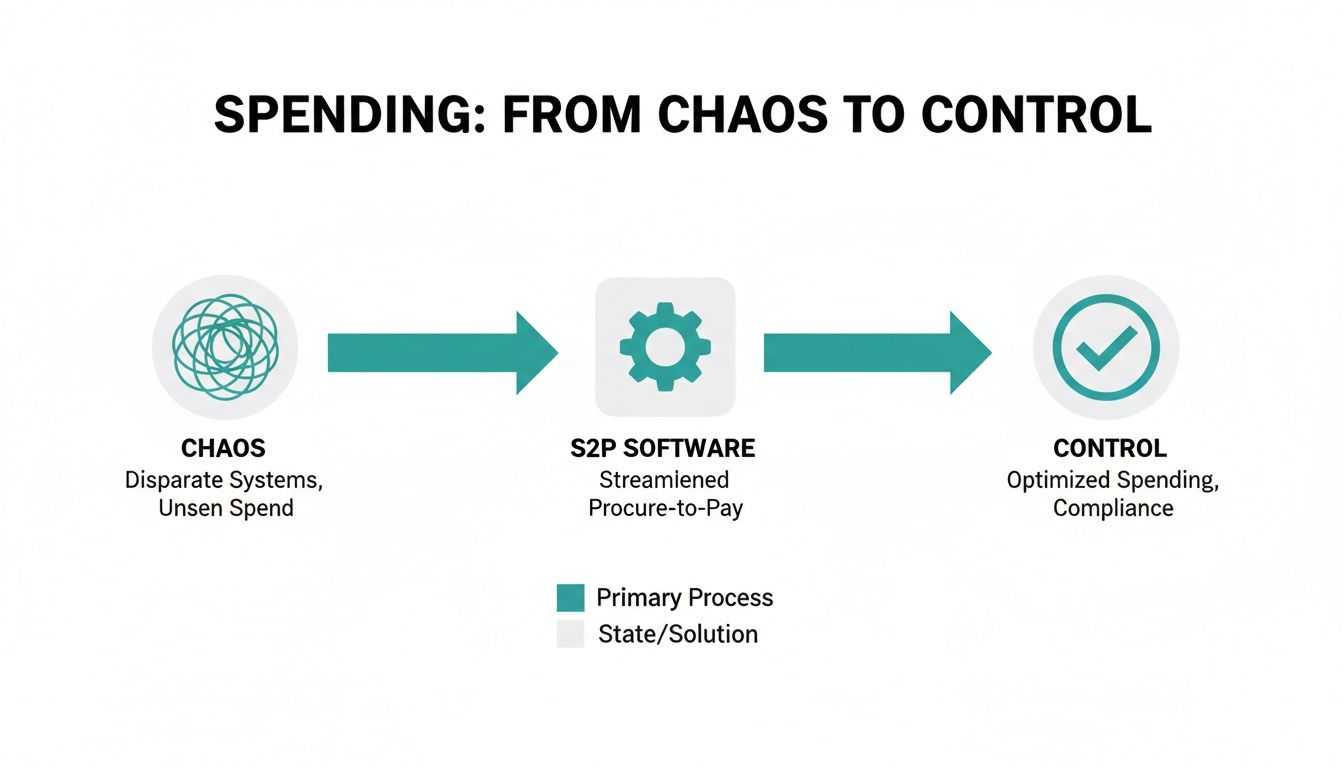
You can see the stark difference between the tangled, inefficient mess of manual procurement and the clean, direct workflow a dedicated platform provides—ultimately giving the business far greater financial control.
Step 1: Strategic Sourcing and Supplier Vetting
The process doesn't kick off with a purchase request. It starts much earlier, with strategy. Instead of just Googling "cloud services" and hoping for the best, the company uses the sourcing tools inside its S2P software to properly find and assess potential vendors.
This isn't just about finding the cheapest option. They can now compare suppliers on things that really matter, like security certifications, uptime guarantees, scalability, and customer support reviews. The software pulls all this information into one place, making it simple to run a formal Request for Proposal (RFP), score the answers objectively, and choose a partner who delivers the best long-term value.
Step 2: Contract Management and Procurement
Once they’ve selected the best cloud provider, the deal terms are captured in a digital contract and stored safely in the software's central repository. This is a huge deal. It prevents what’s known as "contract leakage," where hard-won discounts or special terms get forgotten and never actually applied to the invoices.
Now, we move into the procurement phase. When an engineering team needs to start using the new service, they don’t just send an email—they raise a formal purchase request through the system. That request is automatically sent to the finance manager for approval, confirming it's within budget. Once it gets the green light, the system generates a formal purchase order (PO). This creates a clear, official record of the approved spend before any commitment is made, effectively killing off surprise invoices. To see this stage in more detail, take a look at our guide to purchase-to-pay software.
Step 3: Invoice Processing and Three-Way Matching
A month goes by, and the first invoice from the cloud provider arrives. In the old manual world, this is where everything grinds to a halt. Someone in finance has to waste time digging through email chains to find the PO, then chase the engineering team to confirm the service was actually delivered as promised.
S2P software automates this headache away. The system performs a three-way matching process in an instant, checking the invoice against:
- The Purchase Order: Does the invoiced amount match what was approved?
- The Goods Receipt: Is there a record confirming the services were delivered?
If all three documents line up, the invoice is approved for payment in seconds—no human touch required. For many companies, this automation slashes invoice processing costs by over 80% and frees up the finance team for more important work.
Step 4: Secure Payments and Financial Reconciliation
With the invoice approved, the final step is to pay the supplier. The S2P platform can integrate with payment systems to make sure payments are sent securely and on time. This is more than just convenient; paying on time (or even early) can unlock early-payment discounts, turning the finance team from a cost centre into a value generator.
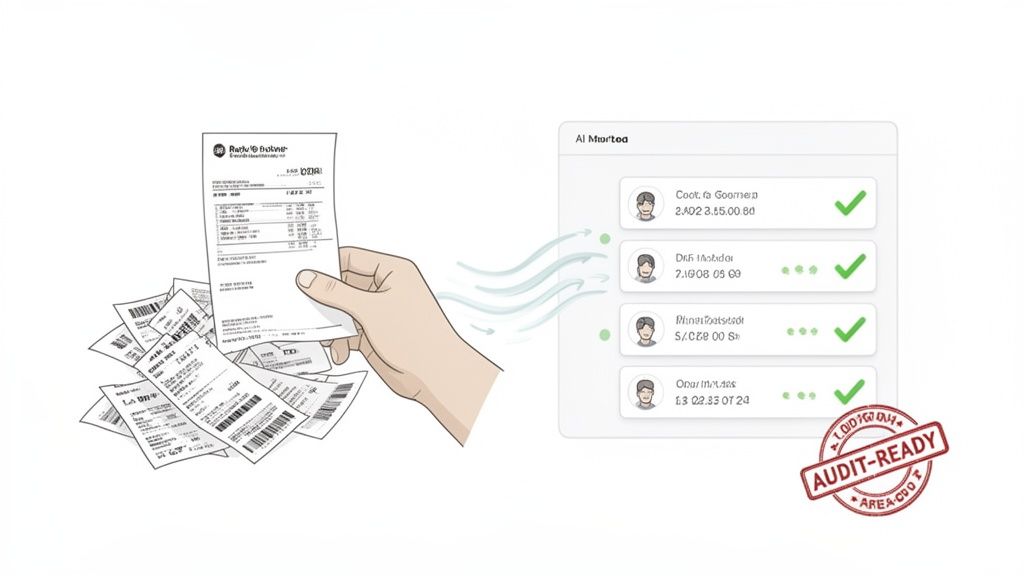
This is also where a tool like Mintline comes in to perfect the process. While the S2P system handles the approval and payment instruction, Mintline takes care of that crucial "last mile" of reconciliation. It automatically matches the payment leaving your bank account to the specific invoice and receipt in the system, creating a flawless, audit-ready financial record.
Step 5: Supplier Relationship Management
But the S2P workflow doesn't just stop once the bill is paid. All the data gathered along the way—from the initial sourcing scores to on-time delivery records and payment performance—is stored and analysed.
This data builds a detailed supplier scorecard over time. The company can now track the cloud provider's performance, monitor spending patterns, and walk into the next contract renewal negotiation armed with cold, hard facts. This data-driven approach shifts the supplier relationship from being purely transactional to a genuine strategic partnership, helping to build stronger ties and negotiate even better deals down the line.
Must-Have Features In Every S2P Platform
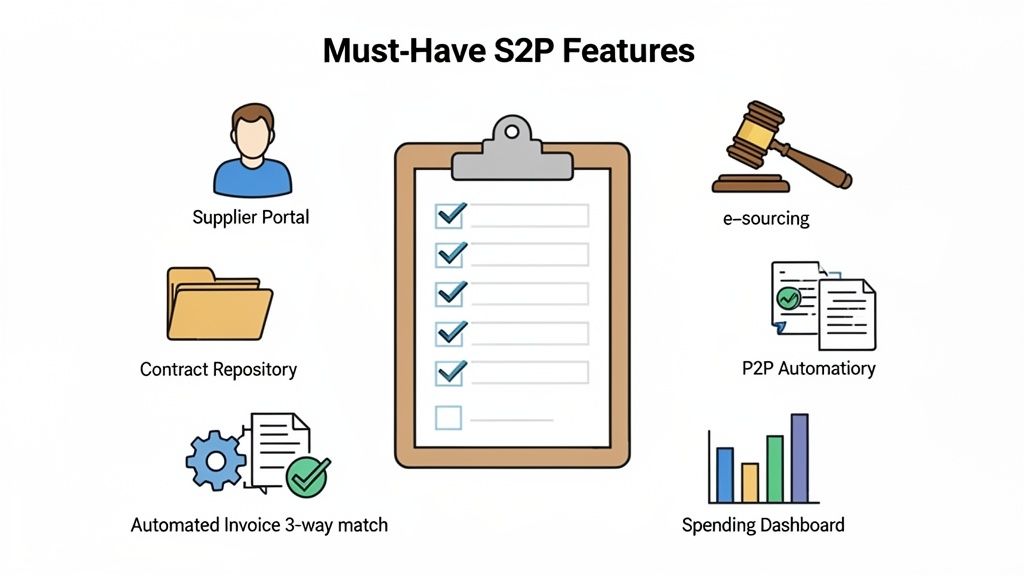
When you start looking at source-to-pay software, the marketing jargon can quickly become overwhelming. To cut through the noise, it helps to have a checklist of the non-negotiable features that solve real-world problems for your business.
These core functions are what turn a disjointed, manual process into a powerful, automated system. For founders and finance managers, this means gaining true control over company spending. A great S2P platform isn’t just a random collection of tools; it’s an integrated ecosystem designed to make every step—from finding suppliers to paying them—smoother, more transparent, and far more strategic.
Core P2P Automation and Spend Control
At its heart, any S2P platform needs to master the day-to-day buying process, often called Procure-to-Pay (P2P). This is where you get a real grip on spending. The goal is simple: eliminate surprise invoices and make sure every purchase is approved and tracked from the get-go.
Here are the key features you should insist on:
- Guided Buying and Purchase Orders: This is an intuitive portal where employees can request goods and services from pre-approved catalogues. It should automatically kick off approval workflows and generate purchase orders, creating a crystal-clear audit trail before any money leaves the bank. To dive deeper into this crucial stage, check out our guide on purchase order management.
- Automated Invoice Processing: Here's the magic that saves finance teams countless hours. The software should be able to digitise invoices and run a three-way match against the purchase order and the goods receipt note. If everything lines up, the invoice gets approved instantly. This alone can slash processing costs by up to 80%.
- Centralised Contract Repository: Stop the frantic hunt through shared drives for old contracts. A central, searchable repository ensures you never miss a renewal date and, more importantly, that the prices you negotiated are the prices you actually pay.
Strategic Sourcing and Supplier Management
A truly powerful S2P platform moves beyond just buying things; it helps you buy things smarter. The strategic sourcing features are all about helping you find the best suppliers and build strong, lasting relationships with them.
An intuitive supplier portal is a must. It allows your vendors to manage their own information, submit invoices directly, and check on payment statuses. This simple feature drastically cuts down on the administrative back-and-forth for your team.
On top of that, look for robust e-sourcing tools. These allow you to run competitive bidding events like RFPs (Requests for Proposal) right inside the platform. This structured approach helps you compare suppliers on more than just price, ensuring you find the best partner for the job.
An S2P platform’s value is directly tied to its ability to connect strategic decisions with daily execution. The supplier you choose in the sourcing phase should be automatically enforced in the purchasing phase, eliminating maverick spend.
Actionable Analytics and Reporting
You can't manage what you can't measure. A top-tier source-to-pay platform gives you clear, customisable dashboards with a real-time view of company-wide spending. For a founder, this kind of visibility is invaluable for making informed budget decisions on the fly.
Look for a system that provides genuine insights into spend by category, supplier performance, and procurement cycle times. This data is your secret weapon for identifying savings opportunities and negotiating better deals. A solid S2P platform should also integrate with modern and efficient expense management software to keep all your financial processes streamlined.
The growing demand for these integrated systems is clear. For instance, the Netherlands ERP software market, which is closely linked to S2P functions, was valued at USD 2.51 billion in 2024 and is projected to hit USD 4.57 billion by 2030. This growth is fuelled by businesses needing better compliance and risk management—highlighting the critical need for tools like Mintline that automate the final, crucial step of matching bank transactions to receipts.
Unlocking the ROI of S2P Automation
Adopting source-to-pay software isn't just about tidying up your workflows; it's a direct investment in your company's financial health. The return on investment (ROI) here isn't a vague promise of saving time. We're talking about tangible cost reductions, reclaimed productivity, and the strategic clarity that comes from having a firm grip on your spending.
For founders and finance leads, this translates into a powerful competitive edge. You can stop guessing where money is going and instead get a real-time, data-backed view of every financial commitment. This visibility is what empowers you to make smarter, faster decisions that directly impact your bottom line.
Quantifying the Hard Cost Savings
The most immediate returns you'll see from S2P automation come from direct cost reductions. By centralising and controlling the entire procurement process, you can finally plug those financial leaks that quietly drain your resources. These hard savings are easy to measure and make a significant dent in your expenses.
- Strategic Sourcing Wins: Good sourcing tools let you run competitive bids and compare suppliers on more than just their sticker price. This data-driven approach almost always leads to better contract terms and lower prices for the goods and services you rely on.
- Early-Payment Discounts: Manual invoice processing is notoriously slow, and that slowness costs you money in missed discounts. Automated workflows can slash invoice cycle times by over 80%, making it simple to capture these savings and turn your accounts payable department into a value generator.
- Eliminating Maverick Spend: When employees buy from unapproved vendors, you lose the negotiating power that comes from buying in bulk. S2P systems gently guide everyone toward preferred suppliers, ensuring you always get the benefit of your negotiated rates.
The Value of Soft Savings and Efficiency Gains
Beyond the direct cost cuts, the "soft" savings from S2P automation can be just as impactful. These benefits come from eliminating the countless hours your team loses to inefficient, manual admin tasks every single month.
Just think about the time spent chasing approvals, manually matching invoices to purchase orders, or fielding endless supplier emails about payment status. S2P software handles these repetitive jobs for you, freeing up your team to focus on work that actually matters—like financial analysis, strategic planning, and building stronger supplier relationships.
For a small business, reclaiming just 10-15 hours of administrative work per week translates into hundreds of hours per year that can be redirected towards growth. This shift from reactive paperwork to proactive strategy is where the real magic happens.
Strengthening Compliance and Financial Controls
A unified S2P system creates an unshakeable foundation for your internal controls and compliance. Every single action—from the initial purchase request to the final payment—is logged, time-stamped, and tracked within one system. This creates a clear, immutable audit trail that makes financial reviews painless instead of a panic-inducing event.
This level of transparency puts an end to rogue spending and ensures everyone sticks to your internal policies. The Netherlands' software development market, which powers many of these financial tools, is set to reach €42.6 billion by 2026, driven by SME demand for exactly this kind of automation. For small teams, this means accessible tools that offer AI-driven matching and create clean, audit-ready exports. You can learn more about the growth of procurement automation in this detailed industry analysis.
Ultimately, the ROI of S2P is about gaining confidence. With clean, real-time financial data, founders can steer their business with precision, knowing every decision is backed by accurate numbers. This is the kind of confidence that allows you to scale your operations without ever losing control of your finances.
How Smart Tools Complement Your S2P Strategy
Jumping into financial automation doesn't have to mean a massive, all-or-nothing leap into a full source-to-pay software suite. While those comprehensive platforms are powerful, many growing businesses find that targeted, high-impact tools can deliver immediate value and enhance key parts of their existing S2P process.
Think of these tools as accelerators. They solve specific, painful problems without forcing a complete operational overhaul. It’s about smart augmentation, not total replacement. You can pinpoint the biggest time-sinks in your workflow—like that final, frustrating step of matching bank transactions to receipts—and plug in a specialised tool to fix it. This approach delivers the benefits of automation in days, not months, making your entire financial tech stack more valuable.
Solving the Last-Mile Problem of Financial Reconciliation
Even the best S2P systems manage the procurement lifecycle beautifully, from sourcing suppliers right through to payment approval. But they often leave a critical gap at the very end. The final reconciliation—that manual nightmare of matching individual bank transactions to their corresponding receipts and invoices—is frequently left as a soul-crushing manual chore.
This "last-mile" problem is where countless hours vanish. A finance team member might spend days sifting through spreadsheets and email attachments, painstakingly ticking off each line item. It’s tedious work, prone to human error, and creates a significant bottleneck when it's time to close the books.
This is precisely where a dedicated tool like Mintline comes in as an essential partner. It’s designed to solve this one problem perfectly, picking up right where many S2P platforms leave off. By focusing on this specific pain point, it delivers an immediate and measurable impact.
How AI-Powered Accelerators Work
Mintline adds a layer of intelligent automation to this final step. Instead of mind-numbing data entry, the process becomes incredibly simple. You can just drag and drop a PDF bank statement directly into the platform.
From there, powerful AI gets to work:
- Automated Data Extraction: The software reads the bank statement, instantly identifying every transaction line—vendor, date, and amount—with zero manual input.
- Intelligent Document Matching: It then scans your uploaded receipts and invoices, matching them to the bank transactions with a high degree of accuracy.
- Streamlined Review: Finally, it gives you a clean, organised dashboard showing all matched items and flagging any that might need a quick human review.
This isn't about replacing your core S2P or accounting software. It's about feeding it perfectly clean, reconciled, and audit-ready data. What once took hours or even days of manual effort can now be done in minutes.
The Growing Need for Accessible Automation
The demand for smart, accessible tools like this is on the rise, especially among small and medium-sized enterprises (SMEs). In the Netherlands, the IT services market, which includes critical components like source-to-pay software, is projected to hit USD 21.59 billion in 2026. A huge driver of this growth is SMEs, which are adopting these solutions at an impressive 15.52% CAGR.
This trend highlights a major shift. For freelancers, startups, and SMB finance teams, accessible SaaS models are breaking down the barrier of high upfront costs and making powerful procurement automation available to everyone. Cloud-based tools that solve specific problems—like using AI for instant PDF statement matching—are becoming essential for small teams looking to operate with enterprise-level efficiency. You can find more insights on the booming Dutch IT services market.
This move towards targeted automation is creating a more flexible and powerful financial ecosystem. By pairing a robust S2P strategy with specialised accelerators like Mintline, businesses can achieve true end-to-end efficiency without the complexity of a monolithic system. Learn more about how this works by exploring our guide on intelligent document processing. This positions Mintline not as an alternative to S2P, but as a vital partner that perfects the process and maximises the value of your financial operations.
A Few Common Questions About S2P Software
Diving into financial automation can bring up some tough, practical questions. For founders and finance leaders exploring source-to-pay software, it’s crucial to get straight answers. This helps cut through the jargon and find a solution that genuinely fits your business.
Here are a few of the most common queries we see from companies as they start to scale.
Is Source-to-Pay Software Just for Big Corporations?
Not anymore. While the old, clunky S2P systems were built for massive enterprises, today’s cloud-based platforms are a different breed entirely, designed with startups and growing businesses in mind. Flexible pricing models make them affordable, and you don’t have to commit to a monolithic, all-in-one suite from the get-go.
The smart approach is to find tools that solve your most pressing problems now and can grow with you later. For instance, specialised platforms like Mintline let you automate a critical piece of the puzzle—like receipt matching—without a huge upfront cost or commitment.
What's the Real Difference Between S2P and P2P?
It’s helpful to think of it like this: Procure-to-Pay (P2P) is the second half of the story. It covers the day-to-day mechanics of buying things—raising purchase orders, checking in goods, and paying the invoices. It’s all about the transactional part of a purchase.
Source-to-Pay (S2P), on the other hand, is the complete narrative. It includes everything in P2P, plus all the strategic work that happens beforehand. We’re talking about finding great suppliers, negotiating solid contracts, and managing those relationships for the long haul. S2P looks at the entire supplier journey, from the initial search to the final payment.
Honestly, How Long Does Implementation Take?
This is the classic "it depends" answer, but for good reason. A full-scale, enterprise S2P suite can easily take months to get off the ground, often involving a ton of customisation and team-wide training. For smaller, more nimble businesses, however, modern cloud tools are far more agile. You can often be up and running in a matter of weeks, not months.
The secret is that you don’t need a massive, disruptive project to start seeing the benefits of automation. You can get big wins from small changes. Hyper-focused tools like Mintline, for example, deliver value from day one. You can upload a bank statement and start automating receipt matching in minutes, proving the immediate impact of targeted automation.
This way, you can score quick victories and build momentum for more automation down the road, all without derailing your current operations.
Ready to put an end to the soul-crushing task of manual reconciliation? With Mintline, you can automate the painful "last mile" of your financial workflow. Just drag and drop your bank statements, and our AI will match every transaction to its receipt in minutes, not hours. Get started for free at Mintline.